I spent years hiding my smile in every photo, embarrassed by crooked teeth. Visiting an Invisalign dentist changed everything — within months, I finally smiled freely, confidently, and without a single second of hesitation or regret.
Welcome, friend. If you’ve ever wished for a straighter, healthier smile without metal brackets and wires, you’re in exactly the right place. This guide walks you gently through everything an Invisalign dentist can offer you.
Discover how an Invisalign dentist can transform your smile with clear aligners, expert guidance, personalized care, and lasting confidence.
Why the Provider Matters More Than the Brand
Invisalign trains general dentists and orthodontists to use its software, but it doesn’t dictate treatment planning. Two dentists using the same aligner system can produce very different results depending on how they map out tooth movement, how often they check progress, and how they handle complications like attachments not bonding properly or aligners not tracking as planned. Choosing a dentist is really choosing a treatment philosophy, not just a product.
What to Look for in an Invisalign Provider

1. Case Volume and Experience Level
Invisalign ranks providers by the number of cases completed each year, from general practitioners up through “Diamond” and “Diamond Plus” tiers. A dentist with a high case volume has likely seen a wider range of bite problems and knows how to adjust a plan when teeth don’t move exactly as predicted. Ask directly how many Invisalign cases the dentist completes annually.
2. Whether They Treat Complex Cases or Only Mild Ones
Some general dentists take on straightforward spacing or minor crowding cases and refer to anything involving significant bite issues, jaw discrepancies, or teeth that need to be extracted. If your case is more complex, look specifically for an orthodontist or a dentist with advanced Invisalign certification, since they’re trained to handle deep bites, crossbites, and more involved movements.
3. In-House Technology
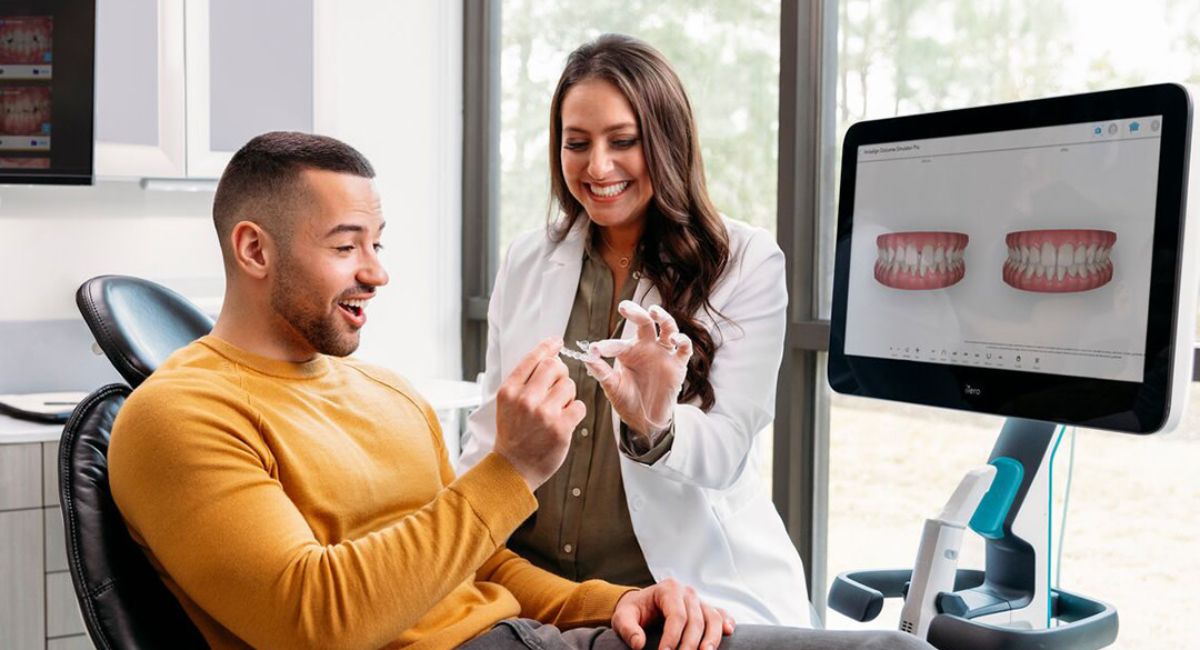
Look for a practice with an intraoral scanner (like iTero) rather than traditional putty impressions. Digital scans are more comfortable, more accurate, and allow the dentist to show you a simulated preview of your projected results before you commit to treatment.
4. A Clear, Realistic Treatment Plan
A good provider will walk you through the ClinCheck treatment plan, explain how many aligners you’ll need, how long treatment will take, and where attachments (small tooth-colored bumps) will be placed. Be cautious of any provider who gives a vague timeline or skips this step entirely.
5. Follow-Up and Refinement Policy
Ask how the practice handles refinements, additional aligners needed if teeth don’t move exactly as planned. Reputable providers build this into the cost upfront rather than charging extra fees later.
6. Transparent Pricing
Invisalign treatment typically ranges from $3,000 to $8,000 depending on case complexity and geographic location. A trustworthy dentist will give you an itemized breakdown covering the initial consultation, scans, aligners, refinements, and retainers, rather than a single vague number.
7. Reviews Focused on Outcomes, Not Just Service
Star ratings are useful, but read a few reviews closely for details about actual results, how closely the final smile matched what was promised, whether treatment took the estimated time, and how issues were handled along the way.
Questions to Ask During a Consultation
- How many Invisalign cases do you complete per year, and what tier are you with Invisalign?
- Will you personally manage my case, or will it be handled by another provider in the practice?
- What happens if my teeth don’t track as expected?
- Is a retainer included after treatment, and for how long should I wear it?
- Can I see before-and-after photos of cases similar to mine?
Red Flags to Watch For
- Pressure to sign up immediately from an Invisalign dentist without providing a full digital scan or discussing your customized treatment plan can be a red flag. A reputable Invisalign dentist should give you enough time to understand the process and ask questions.
- An Invisalign dentist who is reluctant to discuss experience, certifications, or the number of Invisalign cases treated may not have extensive expertise. Always ask your Invisalign dentist about their experience with mild, moderate, and complex alignment cases.
- No mention of retainers after Invisalign treatment is another concern. A qualified Invisalign dentist should explain that retainers are essential for maintaining your new smile and preventing teeth from shifting back.
- Pricing that seems unusually low compared to other Invisalign dentist providers should be carefully evaluated. While affordable treatment is important, an extremely cheap offer from an Invisalign dentist may exclude scans, refinements, retainers, or follow-up appointments. Always request a detailed breakdown of costs before starting treatment.
FAQs About Invisalign Dentist
1. Does Invisalign hurt?
Most patients experience mild pressure or soreness for a day or two after switching aligners, but it’s generally far less uncomfortable than traditional braces.
2. Can I whiten my teeth during Invisalign treatment?
Many dentists recommend waiting until treatment is complete to whiten your teeth, since aligners can trap whitening gel unevenly against your teeth. Ask your dentist for specific guidance.
3. What happens if I lose an aligner?
Contact your dentist right away. Depending on where you are in your treatment, they may advise you to move to the next aligner in the series or have a replacement made.
Final Thoughts
Choosing to work with an experienced Invisalign dentist is one of the most important decisions you’ll make in your orthodontic journey. Beyond the technology itself, the expertise, communication, and personalized care your dentist provides throughout the process can make the difference between a smooth experience and a frustrating one. Take the time to research your options, ask thoughtful questions during your consultation, and choose a provider who makes you feel genuinely heard and supported.